

Insight into computer technologies

Podcast on AI and energy – a balancing act for sustainability (21 April 2026)
The future of digital sovereignty
From trends to actionable intelligence
While the EPO Technology Dashboard provides a comprehensive overview of the latest technology trends, the following insights into computer technologies show how EPO data enable deeper analysis. Data granularity and the transversal analysis of technology fields reveal the dynamics of highly differentiated technical subfields. This indicates which technologies are emerging, which players are leading, and which countries are gaining ground or falling behind.
The enhanced level of detail helps identify the specific technological niches where Europe should build on its lead, accelerate progress, or close gaps. It also demonstrates how a transversal approach to analysing technology fields can provide a more complete understanding of transformations driven by technologies such as AI.
These insights offer a first glimpse of the patent data intelligence that the EPO aims to make freely accessible to the public in the near future.
AI and quantum drive growth
The future of computing is crucial to economic competitiveness and technological sovereignty, providing an indispensable basis for countries and regions to develop their own critical technologies. In 2025, Computer technology (+6.1%) remained the leading field for patent applications at the EPO, boosted by an increase in filings relating to artificial intelligence (+9.5%), particularly in areas such as neural networks and image recognition. The much smaller but rapidly emerging area of quantum computing also saw significant growth (+37.9%), albeit from a lower base. Innovation traversing these areas and other fields too could ultimately pave the way for stronger sovereign digital infrastructure.
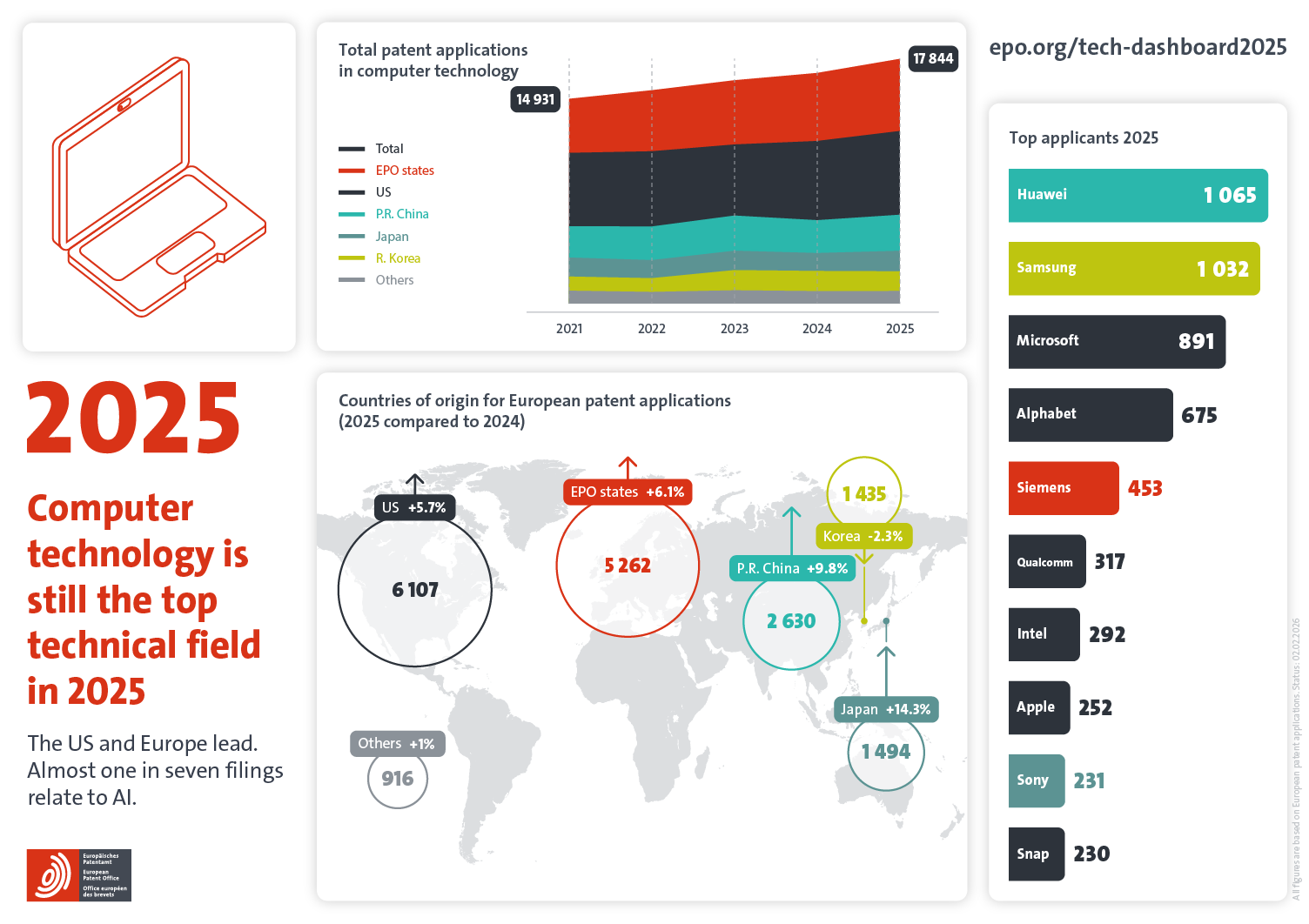
While the US accounted for the largest overall share of computer technology applications, European innovators preserved a narrow lead in AI. They also stayed well ahead in quantum computing, where they posted strong growth (+22.1%), despite a surge in US filings (+43.3%) and, from a lower base, those from Japan (+170.8%).
Artificial intelligence: Europe leads overall, US ahead in neural networks and pattern recognition
As artificial intelligence (AI) transforms digital infrastructure everywhere, a three-way race among the world’s major innovation hubs is intensifying. In 2025, there were 24 times more patent filings at the EPO than a decade ago. Compared to 2024, there was strong growth from the US (+26.4%), while Europe (+2.6%) only just retained the lead it has built since advancements in AI started to take off around 2018. Within Europe, which continues to account for more than a third of all AI filings, Germany leads by a significant margin, despite a slight decrease in filings (-1.1%), with France (+19.0%) and the UK (+28.8%) seeing strong growth.
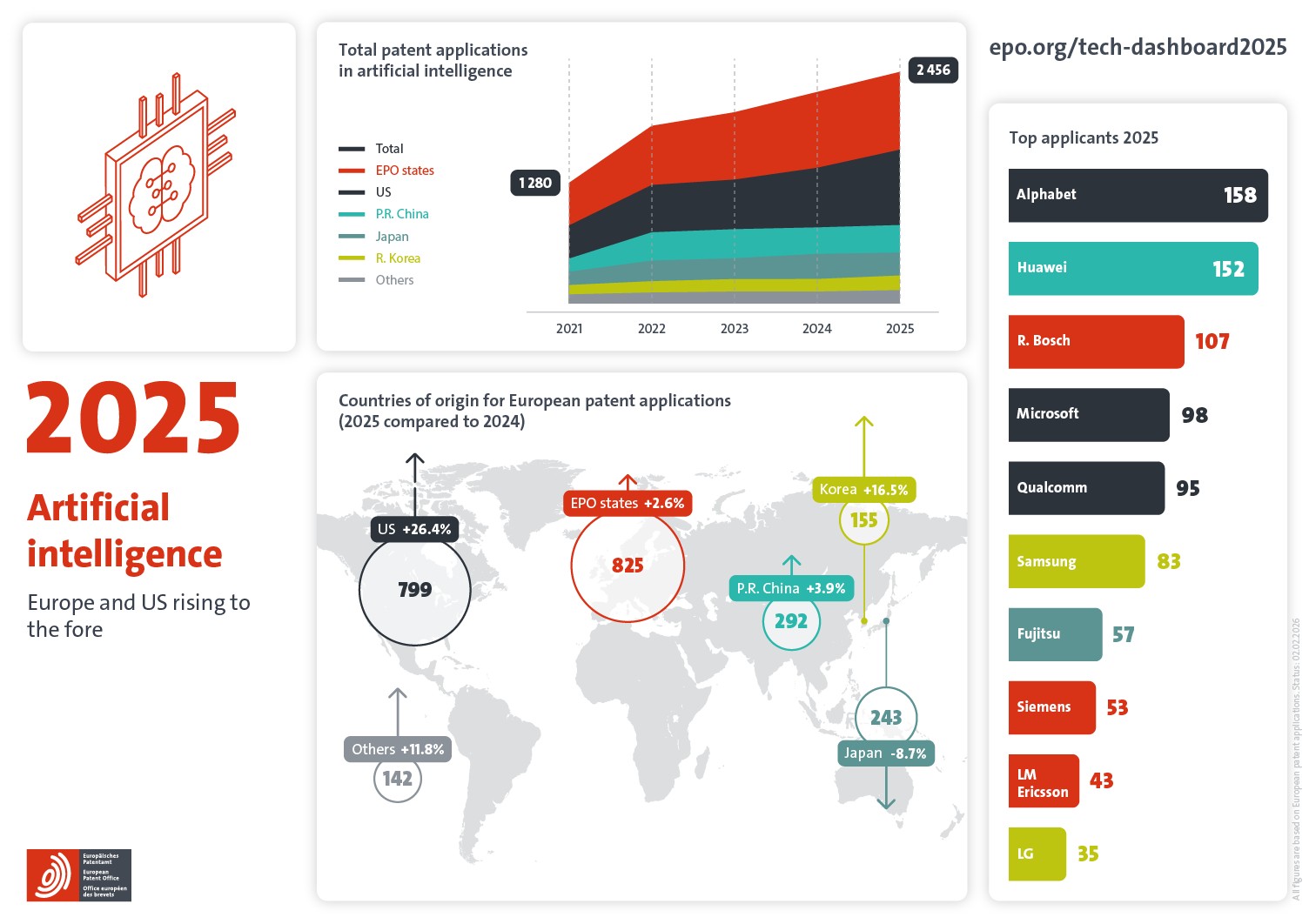
Meanwhile, the combined filings of the major Asian hubs leave them not far behind, with R. Korea seeing significant growth (+16.5%), P.R. China steady growth (+3.9%) and Japan a decrease (-8.6%). The three-way race between Asia, Europe and the US is reflected in the top applicant table. The sustained presence of Robert Bosch, Siemens, Ericsson, Nokia, Royal Philips and Thales, joined this year by Orange, confirms Europe’s prominence in sectors ranging from automotive and communications to health.
AI’s diverse subfields: distinct dynamics and competitive structures
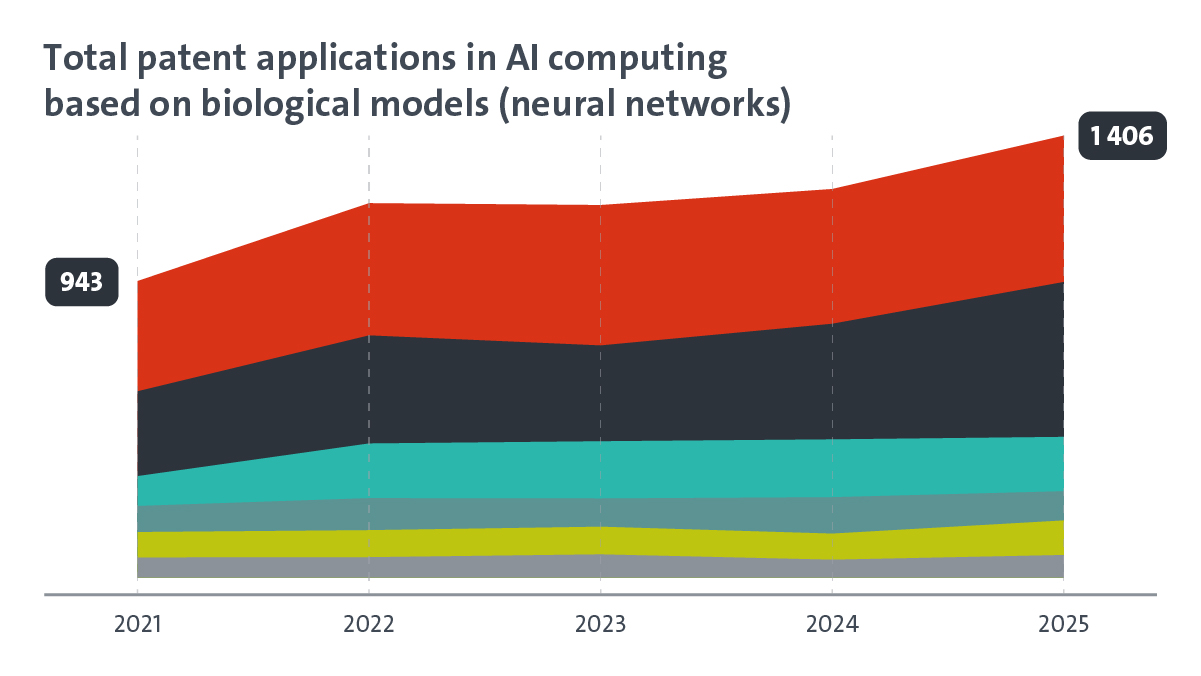
The area of AI consists of highly differentiated technical subfields, each with distinct capital requirements, research dynamics and competitive structures. In the category “Computing arrangements based on biological models”, innovation strives to have AI drive processes in a manner inspired by the workings of the human brain. Filings in this area, which comprise more than half of all AI filings at the EPO, relate to different kinds and applications of neural networks. Growth in filings was strong until 2022 but then levelled off, picking up again in 2025. Europe’s share remained relatively stable at around 35% from 2017 onwards, but declined slightly again last year as the US regained momentum. Top applicants such as Alphabet (Google) and Huawei are among the most active filers overall, with Robert Bosch leading the way in Europe.
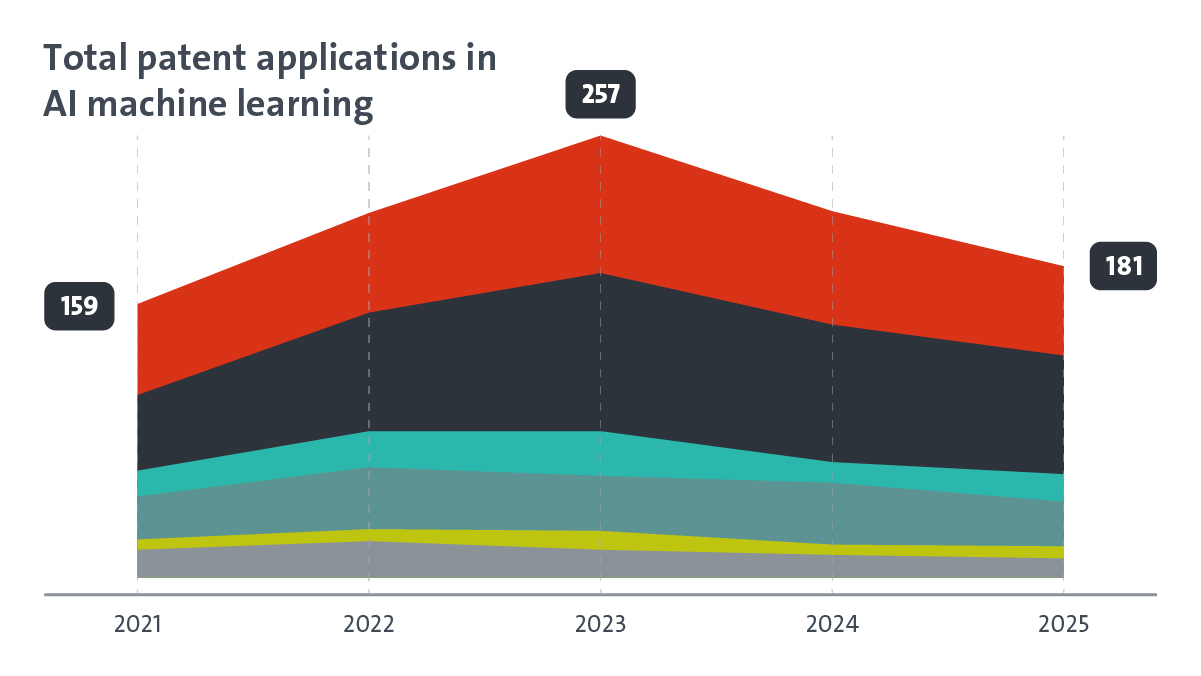
Machine learning enables systems to learn patterns directly from data and is used in sectors such as healthcare diagnostics, infrastructure management, financial markets and public administration. For the moment, innovation in this area seems to have peaked in 2023. By 2025, Europe’s share had stabilised at almost 30% of filings, remaining consistently behind US innovators, with the exceptions of 2019 and 2021.
Pattern recognition involves AI detecting regularities in data, enabling early detection of fraud, cybersecurity threats or outbreaks of disease. Though so far it only accounts for less than 4% of all AI filings at the EPO, this is another area in which the US has once again surpassed Europe in terms of filing activity
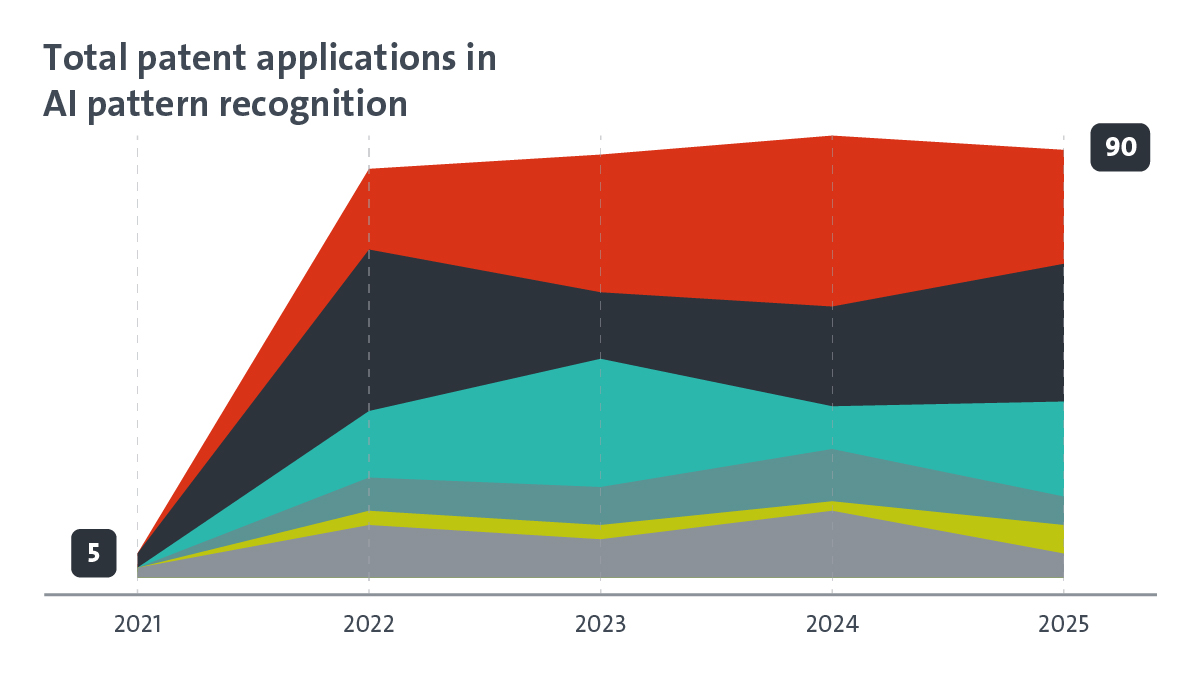
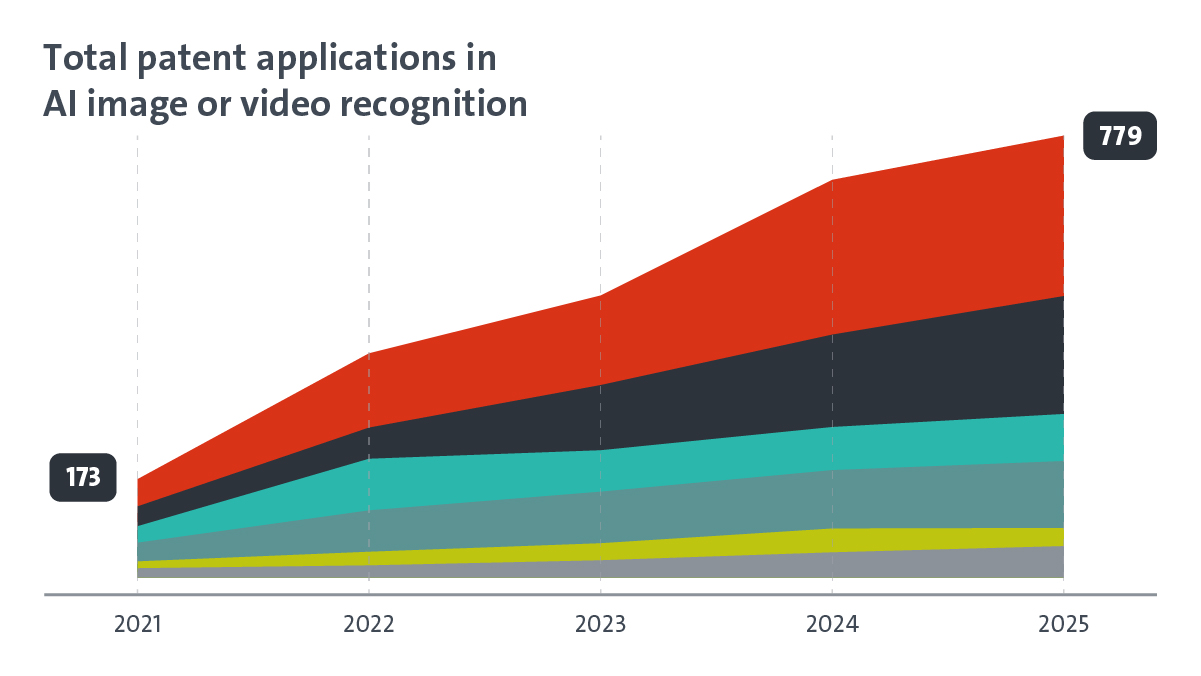
Image and video recognition allows AI to interpret visual data. It is one of the key pillars for achieving success in automated vehicles that can safely navigate traffic and is already transforming areas of medical technology by helping to save lives through early and accurate cancer diagnosis, for example. Now accounting for the second-largest share of AI filings at the EPO, rapid growth has been seen ever since innovation started to take off in 2021, with Europe significantly ahead of the US, though US innovators are gaining momentum in this area too.
New synergies: frontier AI, digital infrastructure and natural ecosystems
Many of the latest advances in AI hinge on agentic AI, or AI systems that can accomplish complex tasks over an extended period of time with limited supervision. Not only is agentic AI revolutionising software development and production cycles; multiple agents can already work together to retrieve and validate extensive data, assess it and co-ordinate procedural steps. They can do so in settings that range from saving lives in emergency rooms to optimising administrative workflows. In robotics, agentic AI can now be used to programme robots using natural language, whether in the form of spoken or written instructions.
In terms of sustainability more generally, according to the International Energy Agency (IEA), the widespread adoption of existing AI applications could lead to emissions reductions that are far larger than emissions from datacentres – but also far smaller than what is needed to address climate change. Energy companies for example are already deploying AI to transform and optimise energy supply and consumption. AI can also improve the forecasting of variable renewable energy and its integration into the power supply.
However, while a large AI-focused datacentre can consume as much electricity as 100 000 households, the largest ones under construction today could consume 20 times that: as much electricity as two million households. Half of the global growth in datacentre demand is met by renewables, the IEA reports, supported by storage and the broader electricity grid. For more on related technologies in these areas, see the EPO Technology Dashboard 2025 insight feature on batteries and clean tech. It is partly the rapidly increasing amounts of energy required to run the industrial AI revolution that is driving investment in more energy-efficient hardware and software, including in the areas of chips and quantum computing.


Semiconductors power smarter AI: European applicants remain strong but lose momentum
Advances that traverse various areas of computing technology often depend on progress made in other fields, including Semiconductors (+7.6%), which saw the greatest growth among the technology fields attracting mid-sized filing volumes. However, last year also saw European applicants have their lead almost entirely eroded by the US, as competition intensifies in the global industry. Annual semiconductor sales reached almost USD 800 billion in 2025 and further growth is expected to take them closer to the USD 1 trillion mark this year. While high-value AI chips now drive roughly half of total revenue, they are estimated to represent less than 0.2% of total unit volume.
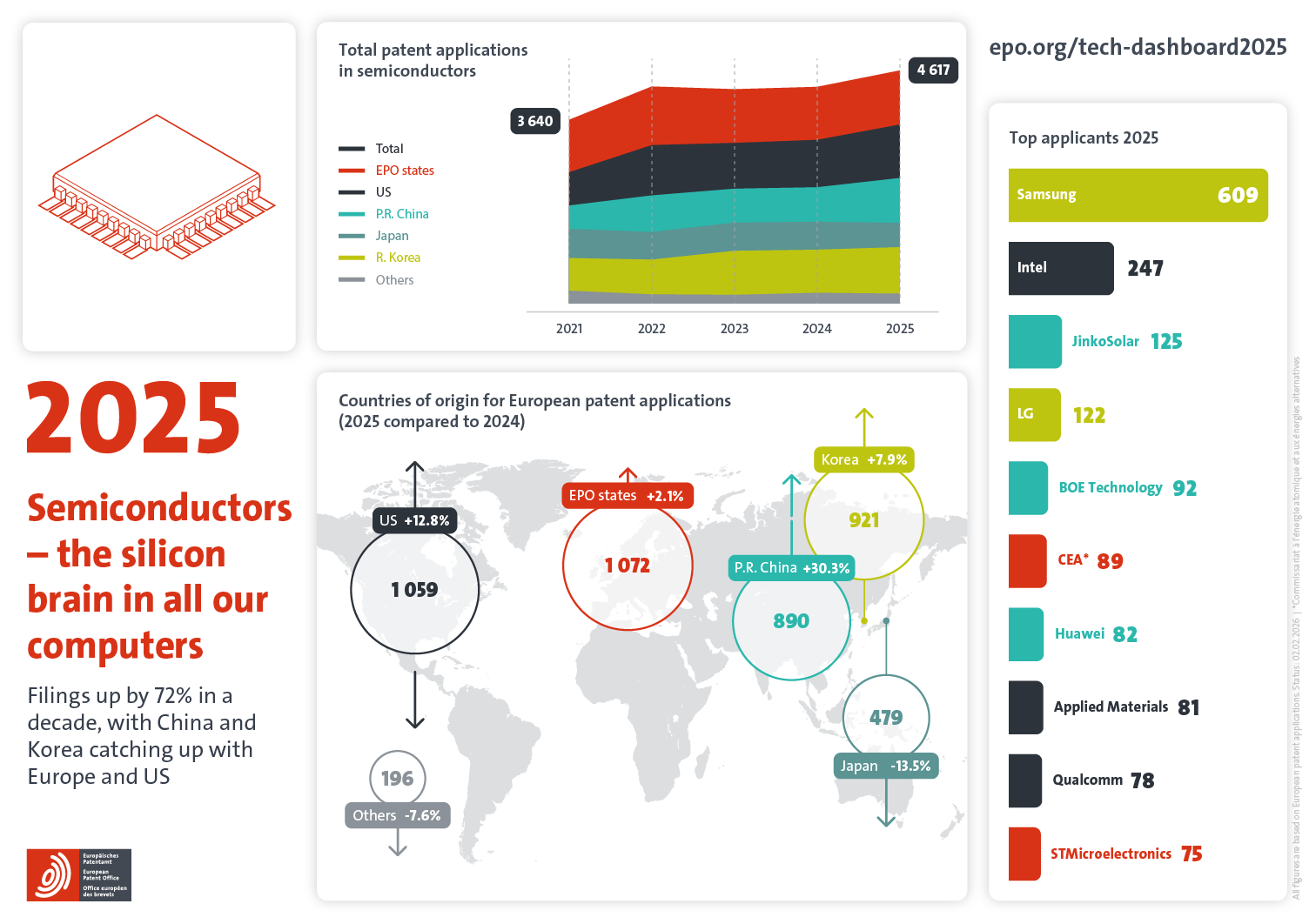
Although the field of Semiconductors is only 16th out of all 35 technology fields by volume of filings, only Digital communication (#2 overall) and the smaller field of Environmental technology saw greater growth in filings (+11.4% each). The combined filings of the three Asian hubs account for more than half of all semiconductor filings, vastly outstripping the share of either Europe or the US. While filings from P.R. China surged (+30.3%) in 2025, R. Korea (+7.8%) remained slightly ahead in terms of total filings. Japan saw a significant decrease (-13.5%) and the US a significant increase (12.8%), almost enough to catch up with Europe (+2.1%).
While Asian and, following a surge in filings from Intel, US companies tend to dominate, the French Alternative Energies and Atomic Energy Commission (CEA) remains among the top five applicants at the EPO. The agency is one of two public bodies in the top 20, along with the Belgian research and development organisation IMEC. Together with the Dutch companies STMicroelectronics, NXP, ASML and Lumileds, these applicants form a stable core group of leading European innovators, extending across energy, electrical engineering and digital communication sectors. Digging deeper into the field, the importance of European public research also becomes clear.
Quantum sets the stage for the next leap in computing: can Europe build on its early lead?
By 2040, the quantum sector is expected to create thousands of highly skilled jobs across Europe and exceed a global value of €155 billion, according to the European Commission. Among three key areas of innovation, quantum communication continues to see the most activity, given its importance for secure communication, financial transactions and data transfer. Quantum sensing enables extremely precise measurements of the smallest magnetic fields and other physical quantities. This makes it particularly useful in specialist areas such as industrial material testing and medical diagnostics, where for example it can be applied to improve magnetic resonance imaging (MRI) for faster and more accurate diagnoses.
Quantum computing promises to dramatically increase computing speed, enabling rapid problem-solving in fields like complex optimisation and molecular modelling. Its potential for efficiently handling complex forecasting is frequently highlighted, including when it comes to grasping climate change and managing electricity grid systems in the age of the energy transition. These forecasts are becoming increasingly complex as electricity supply varies due to the impact of changing weather systems on renewables and demand varies too, with electric vehicle (EV) charging needs, for example, growing in both volume and variability.
In summer 2025, the European Commission published its Quantum Strategy for fostering a sovereign quantum ecosystem to fuel startup growth and transform breakthrough science into market-ready applications. With quantum cryptography expected to play a key role in secure communications systems, it also set out a roadmap for the transition to post-quantum cryptography, aiming to apply this fast-developing and strategically crucial technology to critical infrastructure by 2030.
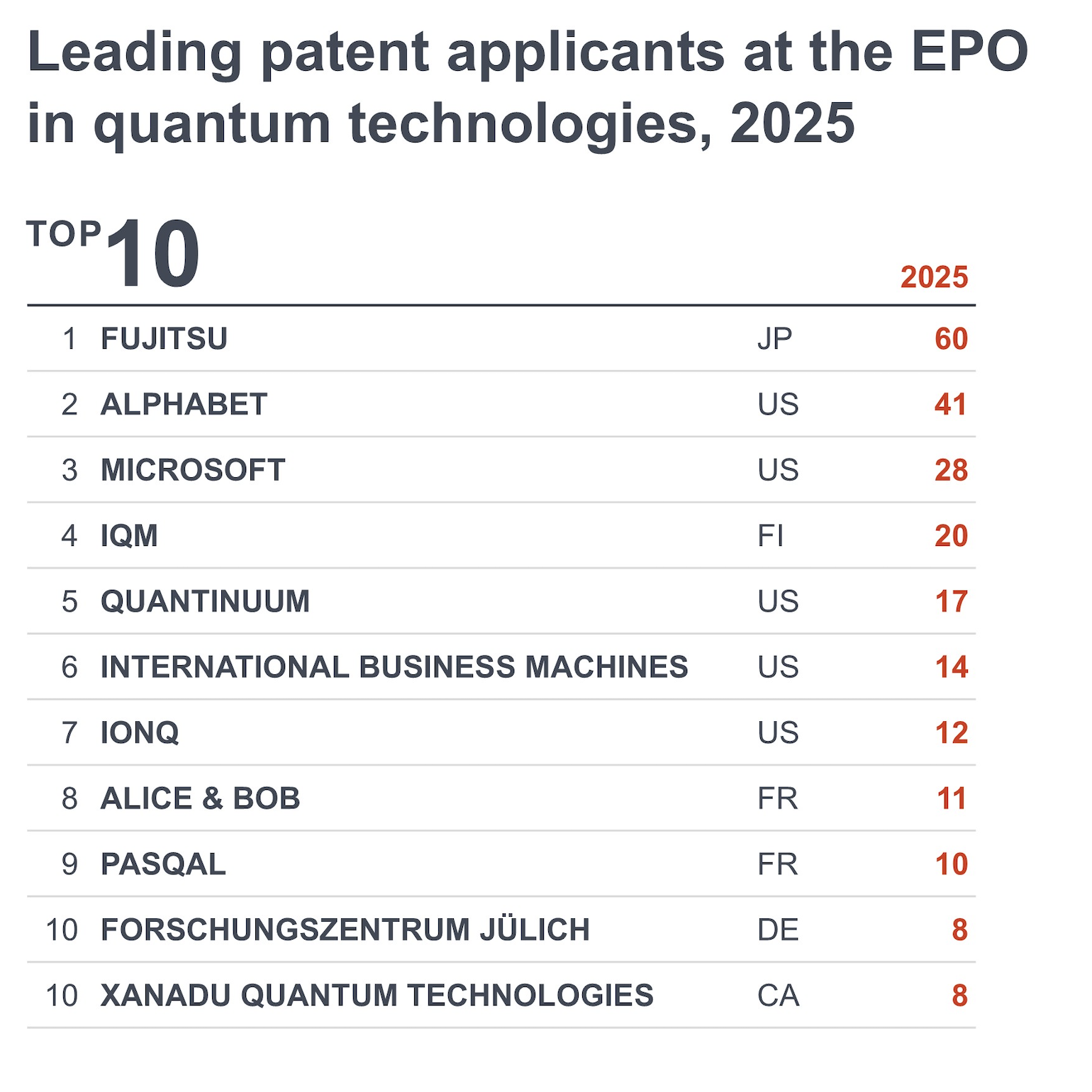
Quantum computing filings at the EPO are up 130% over the last five years, to 451 European patent applications in 2025, with some 44% coming from European applicants and 33% from the US. Overall, as with AI, European applicants have built an early lead, thanks in large part to the diversity of the European innovation ecosystem. European startups, such as leading provider of full-stack superconducting quantum computers IQM, outnumber those from the US among the top ten applicants. The entry into the top ten of one of Europe’s largest interdisciplinary research centres, Forschungszentrum Jülich in Germany, reflects the contribution of public research organisations to the field. This follows the launch last year of Europe’s supercomputer Jupiter, one of the most powerful in the world, in Jülich. Nonetheless, Fujitsu, which has a focus on quantum hardware, took the top spot, while US tech giants Alphabet, Microsoft and IBM consolidated their leading role in the field.
At the interface of physical realisations of quantum computing and AI / machine learning
As reported in the EPO’s 2023 patent insight report on quantum computing, some of the most promising developments in this area often fall into one of two categories. Attempts to physically realise a quantum computer must deal with the realities and the limitations of the world in which we live. While transistors and semiconductors dominate the field of classical computers processing information that is encoded using bits, the landscape is more diverse for qubits, the building blocks of quantum computing.
Nonetheless, the physical realisation of qubits can already benefit from the miniaturisation of electronic circuits seen to date. The steady miniaturisation of transistors inside microprocessors has resulted in dimensions so small that they cause quantum effects to manifest – at times as a nuisance but at others as a remarkable opportunity. Several platforms therefore build on semiconductor manufacturing processes to differing degrees. For example, superconducting circuits and quantum dots can be patterned across full silicon wafers using mostly standard chip fabrication steps.
Quantum computing has already proven particularly well-suited to implementing AI and machine learning (AI/ML) techniques. Further, “hybrid” systems with quantum as well as classical components can implement data and/or AI/ML models (or their training when applicable) in either the classical or quantum realm. This also applies to quantum optimisation in general, typically based on variational techniques and particularly adapted to solve AI/ML problems.
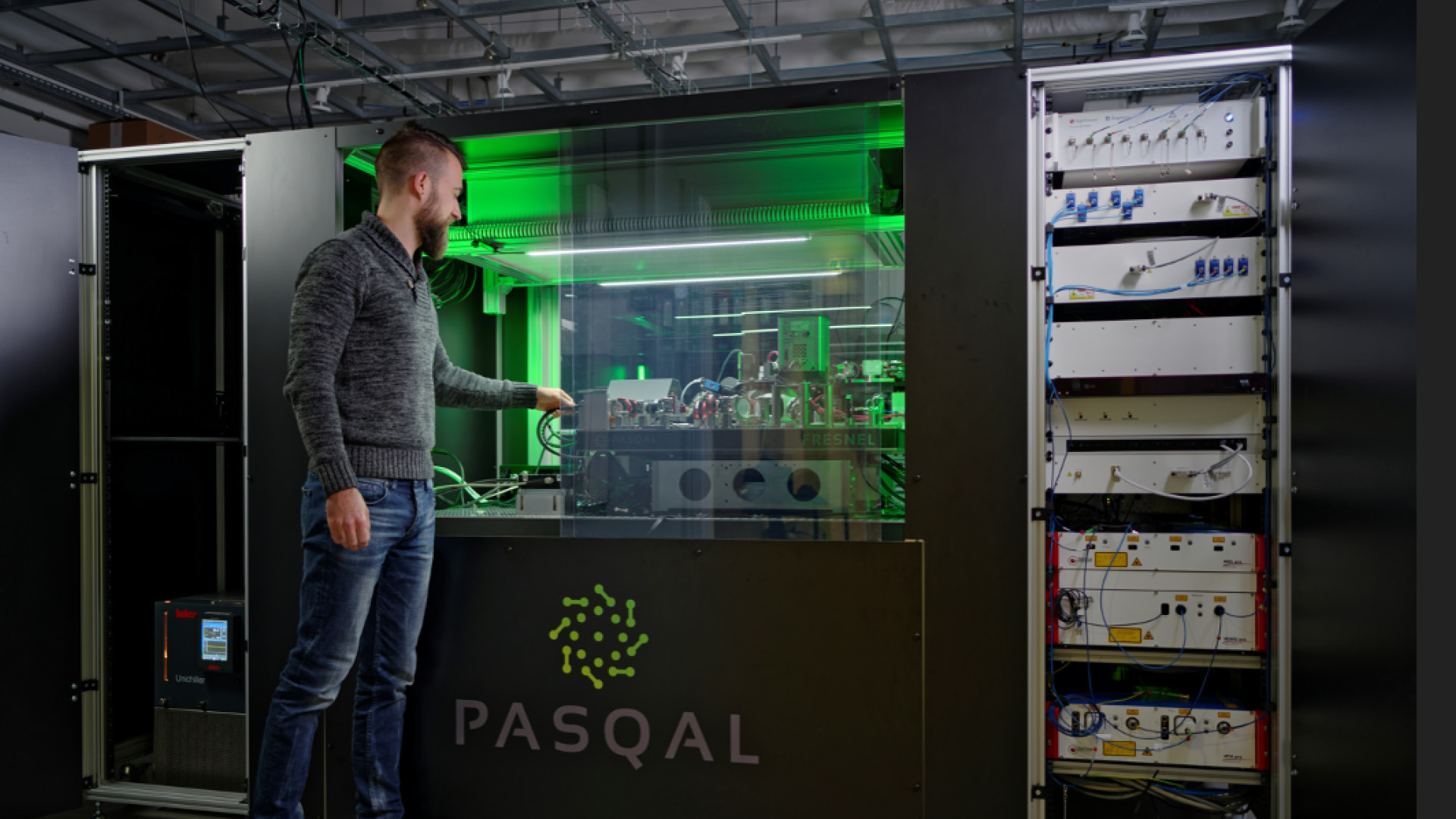
The EPO is continuing to monitor the area of innovation finance, as well as patents and standards, a topic on which the EPO Observatory is due to publish a further study in 2026. This follows Standards and the European patent system (May 2025). For all the latest publications, check out the EPO Observatory’s Digital Library, which also offers in-depth case studies of startups such as Pascal that featured in the EPO’s latest quantum study Mapping the global quantum ecosystem (December 2025).