

EPC Judges' Symposium 2026
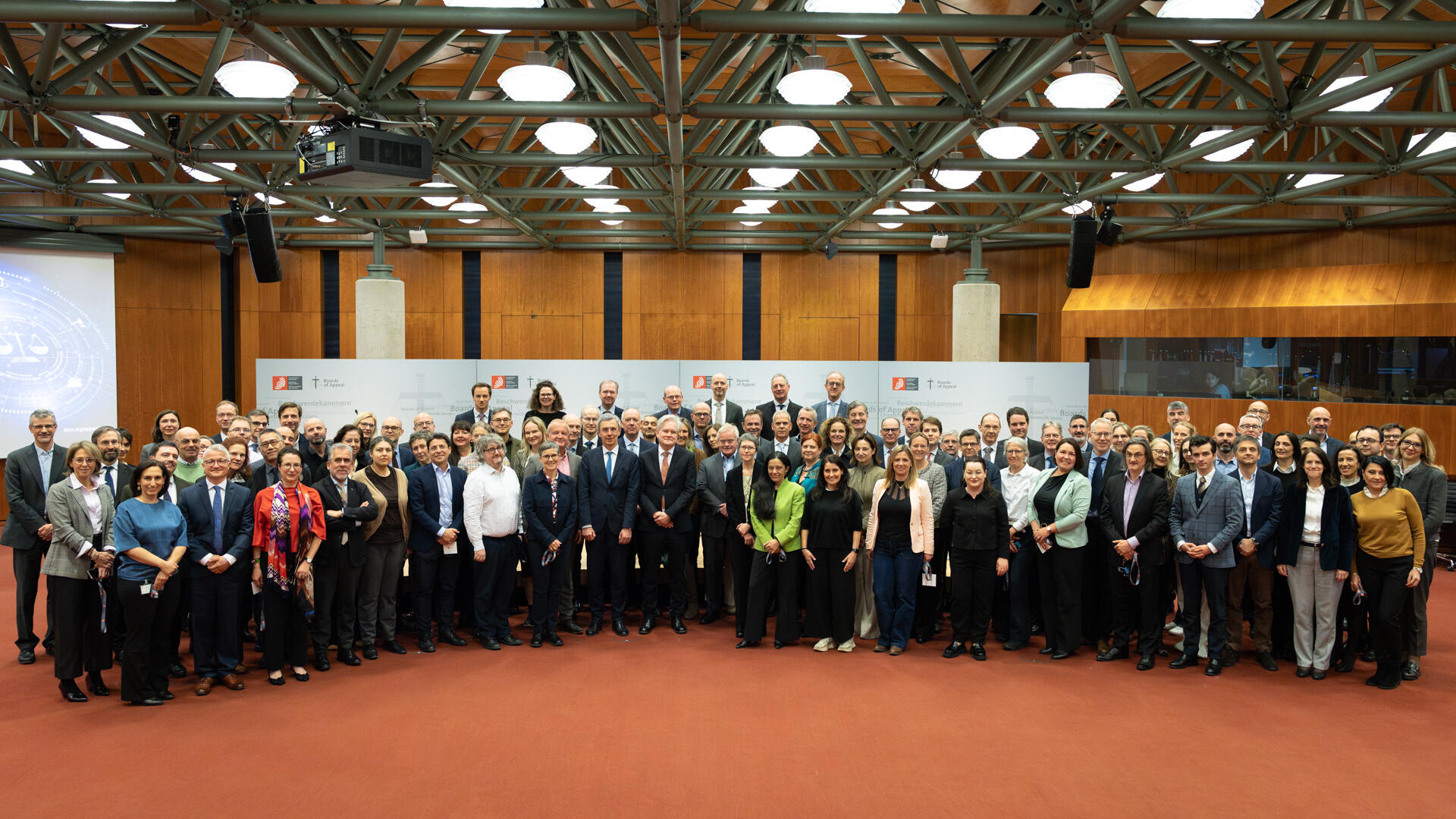
On-site participants of the EPC Judges' Symposium 2026
The revived EPC Judges’ Symposium on 26-27 March 2026 in Munich welcomes patent judges from across Europe, the Unified Patent Court (UPC) and the Boards of Appeal.
Following a 12-year hiatus, the EPC Judges’ Symposium brought together almost 100 judges from 30 EPC contracting states and the UPC and over 110 members of the Boards of Appeal for two days of in-depth exchange on key developments in European patent law and judicial practice.
The symposium opened with welcoming remarks by the President of the Boards of Appeal, Carl Josefsson, and Christoph Ernst, Vice-President Legal and International Affairs of the EPO, both underlining the importance of judicial dialogue in supporting and maintaining a coherent and high-quality patent system across Europe.
The event provided a platform to discuss current developments in European patent law and judicial practice, with contributions from national judges, UPC representatives and members of the Boards of Appeal providing a comparative perspective, reflecting both convergence and diversity in approaches across Europe.
The symposium was structured around three main thematic areas. The first focused on the current European patent litigation landscape with discussions addressing the broader context of parallel proceedings across jurisdictions, highlighting recent trends, national experiences, and the interaction between decisions issued by different courts on the same patent. Particular attention was paid to procedural aspects, including case management techniques, efficiency in handling complex litigation, and the promotion of best practices among parties.
The symposium also explored advances, opportunities and challenges for the judiciary in an increasingly digital environment. Topics covered the current state of digitalisation in court proceedings, including the use of electronic filing systems, virtual hearings, and digital case management tools, as well as the role of artificial intelligence (AI) in judicial work. A dedicated segment on recent case law explored key legal questions surrounding AI, such as inventorship, patentability of AI-based inventions, and the definition of the skilled person.
The second day of the symposium was devoted to substantive issues in the application of the EPC. A central focus was claim interpretation, with speakers providing overviews of Boards of Appeal, national and UPC practices, followed by an interactive mock case. The final session addressed inventive step, comparing different analytical approaches. These discussions reinforced the value of continued dialogue in fostering mutual understanding and consistency in the application of substantive patent law.
The symposium concluded with closing remarks by the President of the Boards of Appeal, who remarked "[w]hat stood out most was not any single topic or remark, but the spirit of the discussions: open, candid, and constructive." He went on to emphasise the value of such exchanges in strengthening judicial co-operation and ensuring the consistent development of European patent law. As part of the Boards of Appeal’s ongoing dialogue with judicial counterparts in Europe, the revived biennial symposium contributed to these objectives.