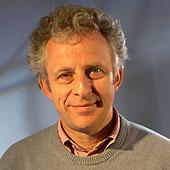
When German inventors Dr. Franz Lärmer and Andrea Urban created the Bosch Process by adapting micro-process techniques, they opened up a new world of affordable car safety devices.

The inventors discovered that nucleic acids can bind to a protein to potentially intercept proteins that cause disease.

The inventors developed solar cells with the highest efficiency ever achieved. They also invented a method for increasing the concentration of light sent to solar cells.

Charles E. Perkins’ invention of mobile IP enables mobile devices to be moved between different networks through the use of home agents, foreign agents and mobile nodes.

These chemical compounds have novel anti-viral properties which can be administered orally, thereby increasing their effectiveness against viruses such as HIV or hepatitis B.

This invention involves the search for derivatives of muramyl dipeptides posssessing effective anti-tumour and anti-inflammatory elements for the use against cancer-related diseases.

A team of Polish inventors discovered a method that enables the production of DNA and RNA components and their analogs in a simple and cost-efficient manner.

An advancement of its predecessor, magnetoresistive head technology, Giant-Magnetoresistance Effect (GMR) vastly increases the data volume stored per square inch of hard drive. The invention enabled an up to fifty-fold increase in the hard drive capacity of typical workstations.

Dr. Michel Bruel invented a simplified method for producing semiconductor wafers that increases the speed of microprocessors built on them while reducing the power that these microprocessors consume. Bruel’s invention has helped provide the engineered substrates that serve as the foundation for today’s most advanced electronic products and nanotechnologies.

P-OLEDs enable the manufacture of displays so thin they could be put onto a t-shirt.