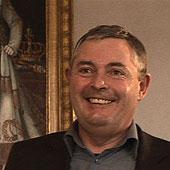
A team of Polish inventors discovered a method that enables the production of DNA and RNA components and their analogs in a simple and cost-efficient manner.

Charles E. Perkins’ invention of mobile IP enables mobile devices to be moved between different networks through the use of home agents, foreign agents and mobile nodes.

The inventions of American scientist Stanford Ovshinsky have arguably put the "green" into auto technology, paving the way for the development of the world's first electric car and the popular hybrids of today. The NiMH battery he invented offers a clean-energy storage solution with record durability and double to triple the capacity of nickel-cadmium batteries of the same size. Besides being at the heart of the eco-tech revolution, this battery is also widely used in consumer electronics.

Led by Federico Capasso and Jérôme Faist at Bell Laboratories in the USA (Prof. Faist is currently with the Swiss Federal Institute of Technology Zurich), a team of physicists invented so-called Quantum Cascade Lasers (QCLs), which are able to reach areas of the electromagnetic spectrum previously untouched by laser light. Today, the ability of QCLs to produce wide bandwidths, high brightness, and high power very efficiently from a compact source has resulted in a wide array of unique products, from hand-held sensors for the detection of explosives and other toxic chemicals to more powerful radar systems.

Surface plasmon resonance is a breakthrough in high-throughput protein interaction analysis. Aiding researchers in a host of fields, the technology is real time, non-invasive, and above all, accurate.
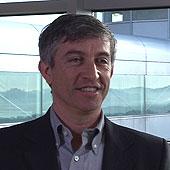
Together with Dr Klaus Hallermayer at Roche Diagnostics, German cardiologist Hugo Katus and his team at the University of Heidelberg developed a new type of blood test in 1994 which revolutionised the diagnosis of heart attacks ─ currently the leading cause of death worldwide. Their Troponin T antibody test brought a new level of accuracy to the detection of heart disease and is now the gold standard for cardiologists worldwide.

Dr. Michel Bruel hat eine einfachere Methode für die Herstellung von Halbleiter-Wafern entwickelt, die einerseits die Geschwindigkeit der darauf angebrachten Mikroprozessoren erhöht und andererseits den Stromverbrauch dieser Mikroprozessoren reduziert. Bruels Erfindung hat zur Entwicklung der innovativen Substrate beigetragen, die als Grundplatten für die modernsten elektronischen Erzeugnisse und Nanotechnologien dienen.
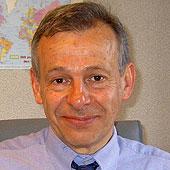
Der Riesenmagnetwiderstand (GMR-Effekt) stellt eine Weiterentwicklung der Vorgängertechnologie, der magnetoresistiven Lesekopftechnologie, dar. Damit lässt sich das auf der Festplatte gespeicherte Datenvolumen im Vergleich zur Speicherfläche beträchtlich erhöhen. Die Festplattenkapazität eines üblichen Computers konnte dank der Erfindung um das bis zu Fünfzigfache gesteigert werden.

Der deutsche Chemieingenieur Manfred Stefener hat zusammen mit Oliver Freitag und Jens Müller die erste tragbare Brennstoffzelle – die sogenannte Direkt-Methanol-Brennstoffzelle – entwickelt. Diese Brennstoffzellen liefern selbst bei Extremtemperaturen effizient, verlässlich und sauber Strom und sind dabei sehr viel kompakter als eine traditionelle Batterie. Sie werden bereits vielfach eingesetzt, vom Verkehrsmanagement über Sicherheits- und Überwachungssysteme bis hin zur Versorgung isolierter Umweltdaten-Messstationen.

Mit den Turbo-Codes hat der französische Ingenieur ein Datenkommunikationsproblem gelöst, das den Forschern 40 Jahre lang zu schaffen gemacht hatte. Seine Erfindung eröffnete der Forschung neue Wege und machte so Fortschritte in der modernen Mobiltelefonie sowie in der Satelliten- und Funkkommunikation möglich.